
The big story of deep time, made approachable.
Trackways, fossils, ancient ecosystems, and the simple evidence that helps us understand animals that vanished long before us.
The big story of deep time, made approachable.
Dinosaurs did not appear all at once, and fossils are not just bones. Fossils include teeth, shells, eggs, burrows, impressions, trackways, and the sedimentary context that helps scientists interpret ancient life.
What is a trackway?
A connected series of fossil footprints. Trackways can preserve direction, movement, body size clues, speed estimates, and sometimes social behavior.
Why context matters
A fossil without its rock layer is missing part of its story. Sediment, position, age, and surrounding evidence help keep interpretation honest.
Not every reptile is a dinosaur
Marine reptiles like Nevada’s famous ichthyosaurs are prehistoric and spectacular, but they are not dinosaurs. Teaching that distinction builds trust.
Nevada’s most famous prehistoric star swam in an ancient sea.
Berlin-Ichthyosaur State Park protects the remains of giant Triassic ichthyosaurs, including Nevada’s state fossil. These animals were ocean-going reptiles, a reminder that Nevada has not always been desert.
Near Las Vegas, Tule Springs Fossil Beds National Monument tells a different story: Ice Age wetlands, mammoths, camels, horses, bison, ground sloths, and other animals that lived long after non-avian dinosaurs were gone.
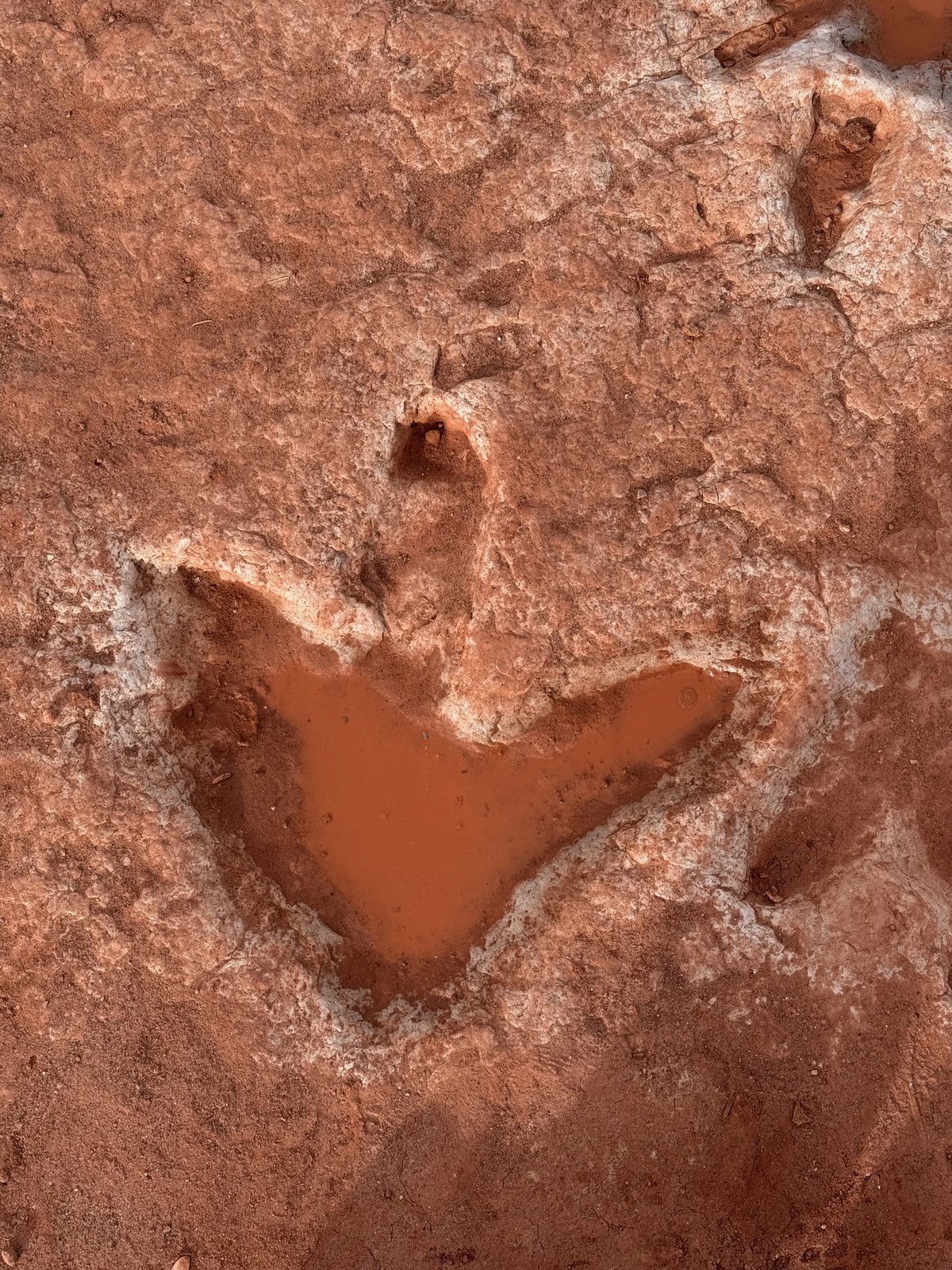
Three simple windows into dinosaur history.
Places Dino Doug fans can learn about.
Tuba City Trackway
Track-rich sandstone in Arizona that helps visitors imagine animals moving across wet sediment more than 190 million years ago.
Mill Canyon & Moab
Utah’s red rock country preserves track-bearing horizons, bones, and museum-ready examples of how field science works.
La Brea Tar Pits
Not dinosaurs, but a powerful Ice Age lesson in preservation, extinction, and how asphalt can trap an ecosystem’s story.